By Shaina Lucas, PPS Editor
You sit down to write an article or a blog post, and like many writers and editors, you face a common problem. Can I use this image in my post? Am I allowed to use this excerpt without the author’s permission? Is it legal for me to access this content for free? If you’ve had any of these thoughts, you’re not alone. Copyright laws can be confusing, and many have a plethora of gray areas.
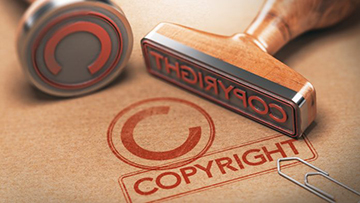
What Is a Copyright Law?
A version of copyright laws has existed since the creation of the United States Constitution. Section 8 of the Constitution states, “1: The Congress shall have Power To . . . promote the Progress of Science and useful Arts, by securing for limited Times to Authors and Inventors the exclusive Right to their respective Writings and Discoveries. . . .” Intellectual property includes original writings (fiction or nonfiction), art, photos, computer programming, phone apps, recordings, and so on, that is fixed in some form (e.g., print, online, or recorded). Symbols such as the copyright symbol “©,” registered symbol “®,” or trademark symbol “™” are used to indicate copyrights, registered patents, and trademarks. If a work does not have these symbols, it does not mean the work is not copyrighted. Copyright is automatically in place in the United States as soon as a fixed form exists, even if the work is not distributed or available to the public. A copyright symbol indicates the work is protected under the highest level of legal protection and lets the copyholder issue an infringement lawsuit.
In 1976, the United States Copyright Act further identified and refined the original Constitutional law but added a few more headaches. The 1976 United States Copyright Act illustrated the basic rights of copyright holders, included the doctrine of fair use, and changed copyright expiration dates. According to Carolyn Rude and Angela Eaton, co-authors of Technical Editing, in the United States “copyright extends 70 years beyond the copyright owner’s death. Works written for hire are protected 95 years beyond publication or 120 years from creation, whichever is shorter. When the copyright expires, works are in the public domain and may be reproduced and distributed by others.” Works written for hire also includes anonymous and pseudonymous work.
Fair Use and Permissions
When work is protected by copyright, anyone wanting to use it must obtain permission. Typically, a writer should request permission from the copyright holder, but editors also verify that permission was obtained before the work is published if the writer did not do so. If permission is denied, then the work cannot be used. Fair use is an exception to this rule. Fair use is detailed in Title 17 of the United States Code, section 107. Fair use allows the copying of some material for educational or noncommercial purposes.[1] One of the most famous cases of fair use is Authors Guild v. Google. According to the Huffington Post’s article, Google was using its Google Books program to store full digitized books in its database, whether it was protected by copyright or not. Full text of the digitized books were not available to the public from Google’s free searchable library unless it was public domain, but Google was still storing the full text of copyrighted material in their database. The court ruled in favor of Google, stating that Google was not violating copyright laws under fair use.
Examples of Fair Use
Thanks to Google, there is debate on updating the 1976 Copyright Act. Many are confused as to what they can and cannot use without permission. Sites like Creative Commons and Flickr allow people to access free images that anyone can use and are not protected by copyright laws. For books, Project Gutenberg specializes in creating ebook works that are public domain like Shakespeare classics, Dracula, and The Adventures of Tom Sawyer. Many images and text on the internet today include watermarks to prevent theft of intellectual work.
Some examples of fair use other than websites are scenarios where a document may need to be copied. Say you need to read a journal entry for a college class, but only the professor has access to the journal. The professor may photocopy that journal entry for the class, but the professor cannot photocopy the entire book since that would deprive the publisher of revenue for its intellectual property. If unsure, always use a citation and contact the copyright holder. Many have different stipulations as to how their work can be used. Some copyright holders require payment while others require only a reference, caption, or citation.
For more detailed information on
copyright laws, please visit www.copyright.gov.
[1] Source: Rude, Carolyn D.; Eaton, Angela. Technical Editing, 5th ed. Upper Saddle River, NJ: Pearson Education, 2011.